Print one copy of the couples bingo card below and play together toward a single line. Take turns choosing a square, complete its activity, and mark it. Five marked squares across, down, or diagonally means bingo; the center Free space counts from the start.
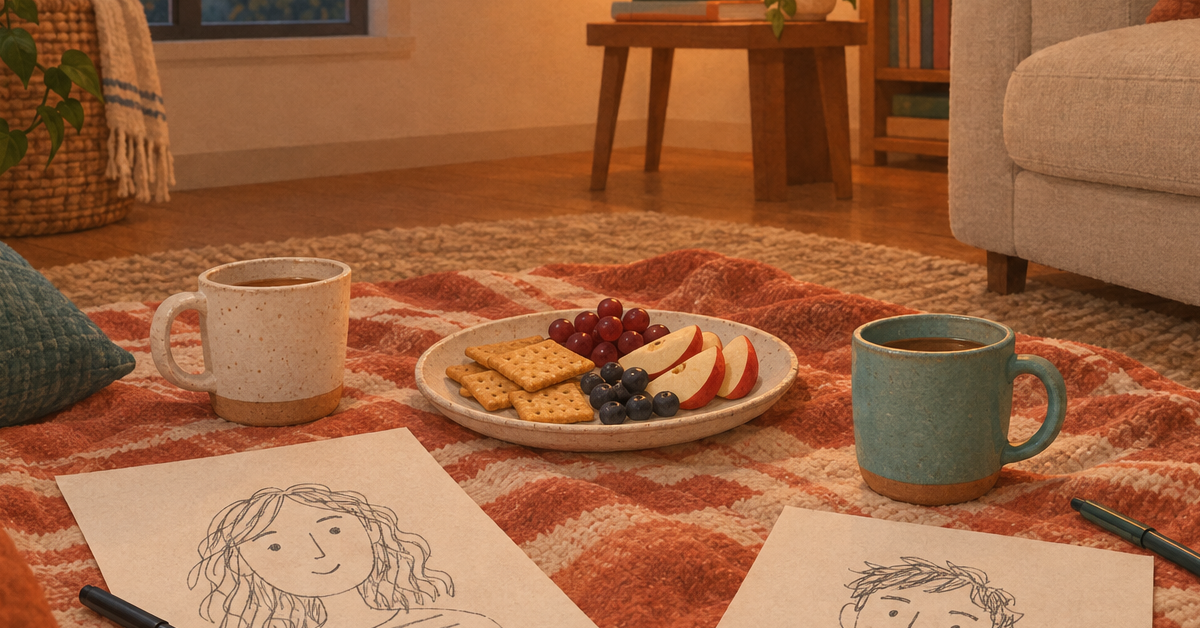
This is activity bingo rather than a number-calling game: the squares give you things to do, say, make, and laugh about. A sixty-second portrait might be excellent. It might also require a label identifying which person it depicts.
How to Play Couples Bingo
- Read the card together. Replace anything that needs supplies you don’t have or asks for something you’d rather skip. Write a different activity in that square instead of adding another free space.
- Mark the center Free space. It is the only square you mark without completing an activity.
- Choose who picks first. Then alternate choosing any unmarked square. You can work toward a particular line or follow whatever sounds appealing.
- Do the activity. Both participate when the square asks for an exchange, such as trading compliments or guessing each other’s usual order. For a joke, tune, or demonstration, one person can lead.
- Mark the square once you’ve done it. Artistic talent, a correct guess, or an impressive answer isn’t required. The activity counts when you’ve participated.
- Finish a line. Five marked squares horizontally, vertically, or diagonally completes the game. Lines through the center require four activities; other lines require five.
Either person can pass on any square at any time, without explaining why. Leave it unmarked, and let the person whose turn it is choose another. A pass doesn’t cost a turn, and it isn’t an invitation to persuade someone.
After your first bingo, stop there or keep playing. You could complete another line, mark the four corners, or each choose one last activity. Finishing the entire card is optional.
Set Up With What You Already Have
Start with the printed card and a pen. Add a few sheets of paper for portraits and notes. Coins or other flat markers work if you want to reuse the card, though a pen is easier if you’re playing somewhere the table might get bumped.
The remaining supplies depend on the squares you keep:
- A snack you can assemble from food already on hand
- A blanket and cushions for a comfortable nook
- A familiar two-player game, if you want to keep that square
- A book, magazine, or other short reading selection
- A way to play a song and, optionally, take a photo
Gather only what you expect to use. The card shouldn’t send you shopping for a date night that was supposed to happen at home. If you have crackers but no elaborate snack ingredients, crackers are fully qualified.
Music and photos may involve a phone. Use it for those tasks, then set it aside if you both prefer fewer interruptions. Keep any sounds or notifications on that you need for caregiving, work, or another responsibility.
Choose a Starting Square That Fits the Evening
For a playful start, try the portraits, the humming challenge, or inventing a team name. These give you something to do before you have to think of anything thoughtful to say.
If you’d rather settle in, make the snack or arrange the blanket nook first. You can eat while you play the talking squares. For a more affectionate opening, trade compliments or write your notes before choosing the next activity.
Look at the line you’re aiming for before committing to it. A line that includes several appealing squares is more useful than the shortest route through activities neither person wants. Change your target whenever you like; this isn’t a tournament bracket.
A Little Help With the Less Obvious Squares
Most prompts work as written. These notes explain the few that leave more room for interpretation.
Draw Each Other in 60 Seconds
Give each person a sheet of paper and start a one-minute timer. Draw at the same time, then reveal the portraits together. Stick figures count. Keep the humor about the drawing rather than the person’s appearance, and let either person decide whether they want their portrait kept. Signing the artwork is optional but adds considerable dignity to a questionable sketch.
Teach a Quick Skill
Choose something your partner is interested in trying: a card shuffle, a simple doodle, a paper fold, or a rhythm you can tap on the table. One person demonstrates, and the other has a go. Keep it brief enough to fit into the game. Save corrections about how the dishwasher should be loaded for an evening that hasn’t been designated a date.
Guess Each Other’s Usual Order
Name one restaurant, café, or takeout place you both know. Each person guesses what the other usually orders, then reveals their own answer. Remembering the extra pickles is a fine achievement, but this isn’t a test of how closely someone pays attention. If you haven’t ordered food together often, guess what each person would choose from a menu instead.
Recreate a Photo Pose
Choose a photo you both enjoy and copy the pose with whatever setting you have. The original may feature a mountain; the remake may feature a hallway. That contrast can be the whole joke. A standing pose can become a seated one, and you can copy the pose without taking a new picture. Keep photos private unless you both agree to share them.
Write Two-Line Love Notes
Write something you’d be comfortable handing directly to your partner. A specific appreciation, an affectionate observation, or a wish to repeat the evening is enough. For example: “I like being here with you. I’d happily choose this date again.” Exchange the notes privately; reading them aloud is optional.
Build a Blanket Nook
Arrange a throw and some cushions wherever you’re comfortable sitting together. An architectural achievement is not required. Once it’s ready, you can play the remaining squares from there. If moving cushions or getting down to the floor is inconvenient, a blanket over your usual seats completes the activity just as well.
Hum a Tune for the Other to Guess
Pick a tune you think your partner might recognize and hum a short section. After a couple of guesses, reveal the title if they haven’t found it. You can switch roles for a second tune, but a correct answer isn’t necessary to mark the square. Knowing a song and being able to hum it are occasionally unrelated talents.
Ask a Light Question of Your Choice
Keep it suitable for the date you’re actually having. “What hobby would you try for an afternoon?” leaves room for an easy answer. A question about an unresolved disagreement changes the activity altogether. Either person can pass, and a short answer counts; this square doesn’t require a surprising revelation.
Pick Your Next Date-Night Theme
Choose a theme you could use without much preparation: breakfast for dinner, a favorite-movie rewatch, an indoor picnic, or a puzzle-and-snacks night. Write the choice on the back of the card. If you already know when you’re both free, add a tentative date. You’re choosing the next idea, not planning every detail before this evening is over.
Two Ways to Change the Pace
Let a Die Choose
Use a six-sided die when neither person wants to make the next decision. Roll once for the row, counting from the top, and once for the column, counting from the left. Reroll any 6. If the resulting square is already marked, roll both coordinates again.
Complete that activity and mark it, then hand over the die. The passing rule stays the same: if either person passes, leave the square unmarked and roll for a different one. Continue until you complete a line. This version adds chance without requiring a second card or anyone to act as a caller.
Play Across Several Evenings
Leave the card somewhere you’ll both see it and complete a square when you feel like doing one together. Add the date beside each mark if you want to remember when it happened. A snack on Tuesday and a dance on Friday can belong to the same game.
Agree that activities count only when you both choose to count them. Otherwise, an ordinary conversation can suddenly become a dispute about whether someone has technically completed a bingo square. Keep the card somewhere private if it includes personal notes or if you’d rather not have household commentary on your progress.
Swap-In Squares for Your Version of Date Night
Write a replacement over an unused square before playing. These options can make the card lighter, more familiar, or easier to use with the supplies beside you. Keep the center Free space where it is.
For a Newer Relationship
- Name a movie you’d happily rewatch.
- Share a favorite childhood pastime.
- Choose a fictional place you’d visit.
- Design an imaginary neighborhood shop together.
If you have little shared history, use these in place of the memory or photo squares. You can keep the evening curious without needing a collection of couple stories already.
For Couples With Plenty of Shared History
- Retell how you met, one minute each.
- Name an expression you’ve picked up from each other.
- Recall a date that took an unexpected turn.
- Choose a photo you’d both like to print.
Pick memories you both enjoy revisiting. An old misunderstanding that one person still wants to resolve is better left off a game card.
For a Low-Energy Night
- Build an imaginary takeout order.
- Solve one crossword clue together.
- Make tea or cocoa for two.
- Take turns naming favorite book characters.
Use seated activities and keep supplies within reach. You can also shorten an existing task: a few lines of reading work as well as a full page.
For a Sillier Round
- Give a weather report for the living room.
- Draw an imaginary household pet.
- Act out a movie title for the other to guess.
- Write a four-line story, alternating lines.
Choose the kind of silliness both people enjoy. Someone who likes drawing may prefer that to performing an impression, and the card has room for either.
Keep the Game Comfortable for Both of You
Adjust movement rather than treating it as a requirement. A slow dance can be a seated sway to a favorite song. Supplies can come to the couch instead of asking someone to move between activities. Agree on the adaptation, do it, and mark the square.
Make space for different sharing styles. One person might tell a long story while the other gives a sentence. Equal participation doesn’t require equal speaking time. If you’d prefer less conversation, replace a few talking squares with drawing, music, or a familiar game.
Keep affection voluntary. A compliment, note, or dance should be something each person wants to offer. If that square doesn’t suit the moment, use the passing rule without turning the choice into a discussion about the relationship.
Plan around a shared household. If other people are nearby, choose activities you’re comfortable doing within earshot. Save private notes for yourselves and use quieter alternatives when needed. Having the whole home to yourselves isn’t a prerequisite for playing.
Decide What Happens After Bingo
A shared card gives you a shared finish. If you want a reward, choose one before starting: open the dessert you set aside, watch a movie you both picked, or listen to a favorite album from your newly established blanket nook. Skip rewards that assign the other person a chore or require them to agree to a future favor.
Before putting the card away, add the date and circle any activity you’d like to repeat. Tuck the notes or portraits behind it if you’re keeping them. Then leave the unfinished squares for another evening—or retire the card after one good line.
Use the worksheet below, or download a PDF to save and print. No sign-up needed.
Couples Bingo: At-Home Date Night
Share one card and mark Free space. Take turns choosing an open square, doing its activity, and marking it. Both join exchanges. Either may pass without explaining; leave it open and choose another. Replace unwanted squares together. Five in a row across, down, or diagonally wins together.
| Recall a shared memory | Slow dance to one song | Make a snack together | Describe your ideal Sunday | Trade specific compliments |
| Tell a clean joke | Build a blanket nook | Share a story from your past | Pick songs for each other | Plan a pretend day trip |
| Draw each other in a minute | Invent a team name | Free space | Teach a quick skill | Guess each other's order |
| Share this week's good news | Recreate a photo pose | Play a familiar game | Write two-line love notes | Describe a favorite place |
| Read a short passage aloud | Take a playful photo | Hum a tune to guess | Ask a light question | Pick your next date theme |
happilylover.com