Start with a total spending limit, including transportation, parking, food, and supplies. A free outing with paid parking may lose to an evening at home; a cooking project is cheaper when the ingredients are already in your kitchen.
Here, free means using what you own, can borrow, or can access without a fee. For anything involving a purchase, agree on the amount first. Then make the invitation specific: “Want to have a floor picnic Thursday at seven? I’ll handle dinner.”
Evenings In
- Living room film festival. Each of you picks a movie on a shared theme: the same actor, a place you’d like to visit, or a favorite genre. Use films available through a service you already have or your library. Schedule an intermission for popcorn and competing reviews.
- Pantry challenge dinner. Pull three ingredients you already have and build a meal around them. Work as a team rather than buying extra ingredients to rescue an ambitious plan. Whoever suggests the most dramatic dish name gets to write the menu.
- Blanket fort reading night. Turn a corner of the living room into a reading nook with pillows, chairs, and a draped blanket. Add a battery-powered light. Bring separate books, or trade chapters of one you both want to hear read aloud.
- Recreate your first date at home. Make an affordable version of the food, find a song you associate with that evening, and compare what you remember. Recreating the atmosphere matters more than matching the menu. Conflicting accounts of who arrived first can remain officially unresolved.
- Use-what-you-have spa night. Put out clean towels, a basin of comfortably warm water for a foot soak, and a calm playlist. Use products you already own rather than buying a kit. Enjoy your own treatments, or trade hand massages if you both want to.
- Borrowed jigsaw evening. Ask a friend for a puzzle they have finished, or check for a local puzzle exchange. Clear a table, sort the edges, and see how far you get in an hour. Leave it out for another evening if space allows.
- Kitchen dance lesson. A free beginner video can supply the steps; a cleared patch of floor supplies the dance studio. Try one short sequence before attempting a whole song. Choose something both of you are curious about, from swing to a line dance.
- “Before I knew you” photo swap. Bring up to five photos from before you met and tell the stories behind them. Choose pictures you’re comfortable discussing, and skip any story you’d rather keep private. A vacation snapshot may introduce a whole cast of people the other person has never heard about.
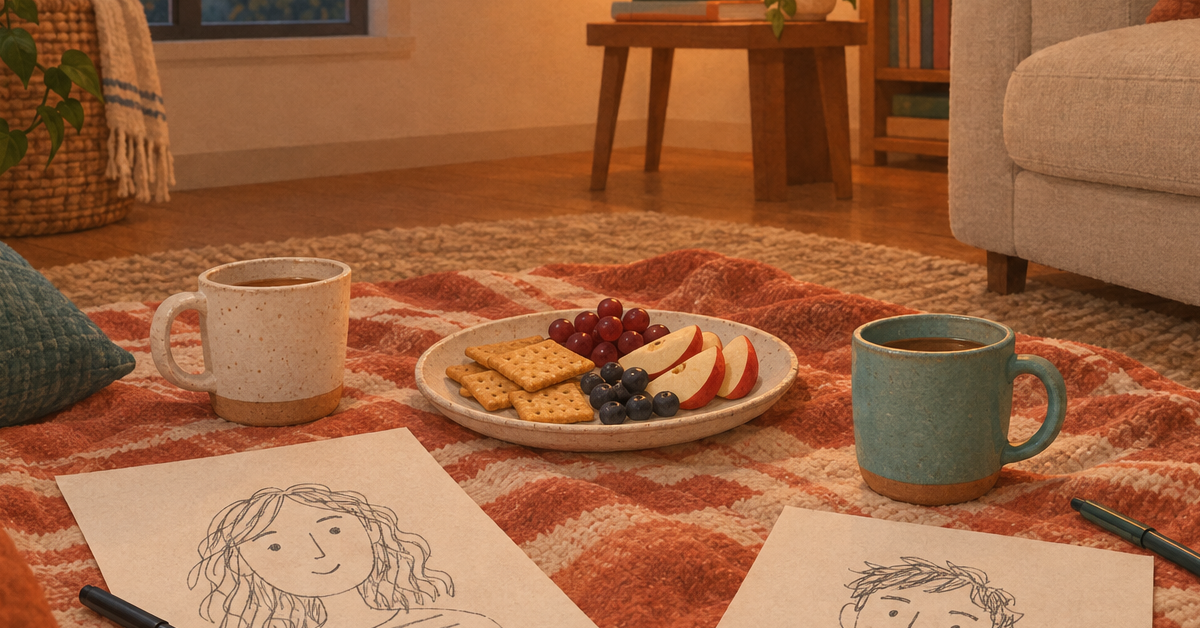
- Floor picnic. Dinner can be the sandwiches you were already going to make. Spread a blanket, put the food within reach, and move away from your usual eating spot. If floor seating is uncomfortable, make a picnic spread at the table instead.
- Cookbook supper. Open a cookbook you own or borrow one, then choose an affordable recipe neither of you has tried. Favor a dish that uses mostly familiar ingredients. Divide the preparation, and leave a note about what you’d change if you make it again.
- Snack taste test. Compare two versions of one snack, using foods you already have or a purchase within your budget. One person labels samples A and B while the other tastes, then switch roles with another food. Reveal the labels after you have both chosen a favorite.
- Playlist exchange. Build each other a short playlist around a theme, such as “songs for our imaginary road trip.” Use music you can already access. Listen together, taking turns explaining a few choices rather than turning every track into a presentation.
Outside With What You Already Have
- Sunrise breakfast. Pack toast, fruit, and a thermos, then choose an east-facing public spot that’s open at that hour. Set everything out the night before so the early start requires fewer decisions. A nearby bench beats a long drive when you’re watching costs.
- Backyard stargazing. Take a blanket outside on a clear evening and find a comfortable spot away from bright lights. Use a constellation guide if you like, or invent your own clearly unofficial star patterns. “The Slightly Crooked Sandwich” is a perfectly respectable contribution.
- A new-to-you trail. Pick a nearby route neither of you has walked. Check access, conditions, distance, and any fees before leaving, then bring water and choose a sensible turnaround point. The date can end at a bench with a view rather than a demanding summit.
- Picnic somewhere unfamiliar. Take lunch to a public park or picnic area you usually pass without stopping. Check admission and parking first. Pack a meal from home, and choose the spot together when you arrive instead of letting one person handle every detail.
- Bike ride with a destination. If you own or can borrow bikes and helmets, plan a manageable route to a lookout, park, or waterfront bench. Bring a snack for the stopping point. Choose a route that suits the less confident rider, including the trip home.
- Phones-away sunset walk. Keep your phones available but silenced, and choose a familiar route with a well-lit return. Walk without tracking steps or making the outing a fitness challenge. A half hour gives the conversation room without requiring an entire evening.
- Beginner geocaching. Look for an easy geocache with a listing you can access for free. Follow the coordinates to search for its hidden container, sticking to permitted public routes. Sign the log if you find it, then return the container exactly as instructed.
- Same-view photo walk. At three public spots, each take one photo without showing the other your screen. Compare your choices afterward: one of you may notice a reflection while the other frames the whole street. Keep strangers and private spaces out of the assignment.
- An afternoon by the water. Choose a lake, riverfront, or beach with free access and affordable transportation. Bring something comfortable to sit on, a book each, and lunch. Watch boats, sketch the shoreline, or spend part of the afternoon doing very little together.
- Kite flying. Bring a kite you own or can borrow to an open area where flying is permitted, well away from roads and power lines. Choose a breezy day rather than stormy weather. Trade the string so both of you get a turn at keeping it airborne.
- Lawn games in the park. Pack a flying disc, ball, or borrowed lawn-game set and find an open patch away from other park users. Play a few casual rounds, then switch to inventing a shared challenge, such as completing ten catches without a drop.
- A local game from the stands. Check for an adult recreational league or community sports match that welcomes spectators without an admission charge. Bring your own seats if needed, learn enough of the rules to follow along, and choose a team to support for the afternoon.
- Farmers market ingredient hunt. Set a joint spending limit and walk one full lap before buying anything. Choose one ingredient you both want to use, then take it home for a snack or side dish. Keep the menu flexible enough to follow the prices you actually find.
Around Town for Little or Nothing
Before heading out, check the venue’s own information for admission, reservations, parking, and purchase minimums. An advertised free event may still involve costs you would rather skip.
- Library book match. Give each other twenty minutes to choose a book for the other person. Explain your picks, then read a few pages in a seating area. The choice can be thoughtful, funny, or unexpectedly accurate; checking it out is optional.
- Museum on a free day. Check the museum’s calendar for free admission opportunities and reservation requirements, or ask your library about passes. Choose one gallery instead of racing through the building. Each find one object you want to learn more about and compare notes.
- Public gallery opening. Look for a gallery event advertised as open to the public, and confirm that entry is free. Browse at your own pace and listen if an artist is discussing the work. Mention a specific detail you liked rather than feeling obliged to sound like an art critic.
- Free outdoor concert. Find an all-ages performance on a park, campus, or community calendar. Check seating and food rules before packing chairs and snacks. Try an act neither of you knows, then each choose a favorite song from the set.
- Open mic as the audience. Choose an all-ages program with a lineup that suits you both, and check for a cover charge or required purchase. Stay for several performers rather than only one act. Compare favorites afterward without making the less polished performances the evening’s joke.
- Tourist-at-home afternoon. Visit one local landmark or viewpoint you’ve never made time for, choosing somewhere without an entry fee. Read the plaques, take the obvious souvenir photo, and send it to someone who will appreciate your extremely short-distance travels.
- Thrift store style challenge. With a modest agreed budget, choose one wearable item for each other. The recipient gets approval before anything is purchased. Look for something they might actually enjoy, whether that’s a bright scarf, an interesting shirt, or a useful jacket.
- Budget matinee. If a nearby theater offers discounted showings, compare the full ticket total before booking. Pick a film you both want to see rather than choosing only by price. Make concessions optional, and plan around any transportation or parking expense.
- Two-stop dessert stroll. Check menus and set a total budget before choosing two nearby places. Share one treat at each, if the portions suit you, and walk between stops. Give the outing a theme, such as chocolate versus fruit or cookies versus ice cream.
- Self-guided walking tour. Look for a route published by a visitor center or historical organization, then download or print it before leaving. Take turns reading the stops aloud. Choose a short route with places to sit, and check that it doesn’t require paid entry along the way.
- Dream-room furniture browse. Visit a furniture store that welcomes browsing and put together an imaginary room. Agree on a style, compare your favorite pieces, and sketch the arrangement afterward. Keep it a design exercise rather than letting an afternoon out become an unplanned purchase.
- Public garden visit. Look for a garden or arboretum with free admission or a price that fits your limit, including parking. Follow whichever paths interest you, then choose a favorite place to sit. Notice textures, shapes, and scents instead of trying to identify every plant.
- Author talk or public lecture. Check local event listings for a free talk on a subject one or both of you are curious about. Confirm registration and audience requirements. Afterward, discuss one idea that stayed with you and one question you wish the speaker had answered.
Make Something Together
- Hand-cut pasta evening. Find a beginner recipe that suits the ingredients and kitchen tools you have. Divide the mixing, rolling, and cutting, leaving enough time to enjoy the process. Keep the sauce straightforward so the handmade part remains the main event.
- Twenty-minute portraits. Sit across from each other with paper and whatever pencils or paints are already available. Set a timer and reveal the drawings together. Sign and date them; an artist’s explanation delivered with great seriousness can be part of the presentation.
- Windowsill herb project. If you have a suitable sunny spot, price a seed packet or seedling, soil, and a reused pot with drainage holes. Choose an herb you actually use. Plant it together and make a label, keeping the project to one pot if supplies add up.
- Story in alternating sentences. Open a notebook and write one sentence each, taking the story wherever the previous line leads. Try this original starter: “The package arrived three days before anyone ordered it.” Set a page limit so you eventually have to invent an ending.
- Future-opening time capsule. Choose an opening date and each write a few predictions about your shared life, favorite entertainment, and the world around you. Add a current photo and a note about an ordinary day. Seal everything in a box and put the reopening date on your calendars.
- One-take short film. Use a phone you already have to make a one-minute silent movie about a household object’s adventure. Plan three moments, improvise the props, and shoot without complicated editing. Take turns operating the camera, then hold a premiere for your audience of two.
- Mini scrapbook or zine. Fold a few sheets into a booklet and fill it with memories from a trip, season, or ordinary month. Use existing photos, ticket stubs, captions, and drawings rather than buying supplies. Give the publication a title worthy of its highly specific readership.
- Half-and-half pizza experiment. Make one pizza with two different topping combinations, using ingredients you both enjoy. Each person designs a half and gives it a menu name. Taste both before deciding what deserves a place in your regular dinner rotation.
- Learn a magic trick. Each find a beginner trick using ordinary playing cards or another object you own. Practice separately, then perform for each other. Give yourselves a little rehearsal time so the evening includes an actual reveal, not an hour of watching tutorials.
- Hand-printed wrapping paper. Flatten clean paper bags or use plain paper you already have. With water-based paint and a pencil eraser or folded cardboard, print a repeating pattern together. Let the sheets dry and keep them for future gifts, with matching handmade tags if you’re enjoying yourselves.
- Letters through the mail. Write each other a letter and budget for two stamps, even if you share an address. Include an appreciation, a recent memory, and something you’re looking forward to. For a free version, seal the letters in envelopes and agree when to open them.
Games and Friendly Competition
- Board game tournament. Choose a game you own with rounds short enough for a best-of-three match. Agree on the finish time before starting. If your experience levels are uneven, play an open practice round first or choose a cooperative game instead.
- Trivia about each other. Each write five everyday questions about yourself, with answers, then take turns guessing. Try favorite snacks, a first job, or a hobby you’d like to try. Award one point for a match, and allow either person to pass without a penalty.
- One round of mini golf or batting cages. Look up local prices and choose a single activity that fits your budget, including equipment fees. Agree on the number of rounds or tokens before arriving. Keep the prize to bragging rights rather than adding another purchase.
- Backyard Olympics. Set up three events with things you own: rolled-sock tossing into a basket, paper airplane distance, and balancing a paperback on your head. Each invent one bonus event. Award paper medals with impressively formal titles and no actual athletic expectations.
- Neighborhood scavenger hunt. Each list five things likely to appear along a public walking route, such as a clock, bicycle rack, or tile mosaic. Swap lists and record your finds as you walk. Stay on public paths and leave objects where they belong.
- Cooperative video game session. Pick a cooperative puzzle game you already own and tackle one level or challenge together. Let a newer player learn the controls before setting a goal. Agree on a stopping point so “one more try” doesn’t take over the entire night.
- Draw-and-guess rounds. Write clean, familiar prompts on slips of paper, mix them, and take turns drawing while the other guesses. Give each round one minute and count successful guesses as a team. Try to beat your first score with a second batch of prompts.
- Two-player word hunt. Pick a long word and spend five minutes making shorter words from its letters, using each letter only as often as it appears. Compare lists and award a point per valid word. Settle any dictionary disputes together after the timer ends.
- A new card game. Find rules for a two-player game that works with the deck you have. Play the first round with cards visible so you can learn together, then start a regular round. Keep the rules nearby instead of expecting one person to remember everything.
- Crossword partnership. Use a puzzle you already have or one offered free by its publisher. Share a pen and take turns reading clues aloud. Mark uncertain answers lightly, and see how far your combined interests get you before looking anything up.
Dates for the Season You’re In
- Spring bloom walk. Choose a nearby public route with flowering plants and bring a borrowed field guide if you’re curious about their names. Compare leaf shapes and colors, leaving blooms where they grow. Return later in the season to see what has changed.
- Rain-watching hour. Sit on a sheltered porch or beside a window with drinks made at home. Let the weather provide the entertainment while you talk, listen, or sit without filling every pause. Keep a blanket nearby if the spot is chilly.
- Backyard campout. Set up a tent you own or can borrow, bring flashlights and snacks, and spend a summer evening outside. Sleeping there is optional; you can return indoors whenever you prefer. Check the forecast and use the yard only if it suits the conditions.
- Homemade ice pop tasting. Make ice pops in molds you own or paper cups, using a recipe that fits ingredients on hand. Start early enough for them to freeze, then meet on the steps or patio for the tasting. Invent a name for your favorite combination.
- Short fall foliage drive. Map a modest loop rather than spending the whole day driving, and account for fuel costs. The passenger handles navigation and music. Stop only in designated, safe parking areas when you want to get out and enjoy the view.
- Pumpkin decorating. Share one pumpkin or buy two if your budget allows. Use markers or paint you already have instead of purchasing a decorating kit. Work on opposite sides of a shared pumpkin, then turn it around for the reveal.
- Holiday lights walk. Find a neighborhood display viewable from public sidewalks, dress for the weather, and bring a warm drink from home. Each choose a favorite detail, from an elaborate miniature village to one excellent string of lights. Check fees before substituting a ticketed attraction.
- Snow-day construction project. Build a snow person with a name, posture, and a surprisingly detailed occupation. Use accessories you already own and remember to bring them back inside. Follow the outdoor portion with dry socks and a drink at home.
- Hot chocolate bar. Set out cocoa and whatever additions are already in the cupboard: cinnamon, marshmallows, or chocolate shavings. Make each other a custom mug based on known preferences. Give your temporary café a name, then settle somewhere comfortable to enjoy it.
Dates That Help Someone Else
Choose something you both want to do, and let the organization’s needs determine the activity. Check requirements before making it your date plan.
- Food bank packing shift. Check a local food bank’s current volunteer openings, then register for a shift together. Read its clothing, training, and scheduling requirements rather than arriving unannounced. Pack lunch for afterward if you want time to talk without adding a restaurant bill.
- Organized park cleanup. Join a community cleanup with clear instructions and supplies. Stick to ordinary litter, leaving sharp or unidentified items for organizers to handle. Work the same section together and allow time at the end to return equipment and help finish properly.
- Animal shelter volunteer session. Ask a shelter about supervised opportunities suited to new volunteers, including any training or advance commitments. If both of you want to participate, complete the requirements and book an approved shift. Treat it as a planned commitment rather than a drop-in animal visit.
- Baking for someone you know. Ask a neighbor or friend whether they’d enjoy baked treats and check their food preferences first. Make a batch together, package it with an ingredient list, and arrange a convenient handoff. Keep a few portions for your own after-delivery snack.
Low-Energy Dates for Tired Nights
- Question cards on the couch. Write a few questions on scraps of paper and take turns drawing. Try “What meal would you happily eat every week?” or “What would you like to learn for fun?” Either person can skip a card; a good conversation matters more than finishing the pile.
- Virtual aquarium window. Look on a zoo or aquarium’s official website for a free public live camera. Watch together for a short stretch and see what you notice without turning it into a research project. If the animals aren’t visible, choose another feed rather than waiting indefinitely.
- Audiobook in the dark. Use an audiobook you own or borrow digitally if your library membership includes that service. Pick a story you both enjoy, dim the lights, and set a chapter limit. For a mystery, pause before a reveal and compare your guesses.
Make the Plan Easy to Use
Give it a beginning and an ending. “Let’s visit the market Saturday from ten to eleven” is easier to arrange than an open-ended suggestion. Mention anything the other person needs to bring, and leave room to extend the date if you both want to.
Trade the planning work. Taking turns can include choosing the activity, checking details, gathering supplies, and cleaning up afterward. Share the cost and basic plan before making reservations or purchases; a surprise works better when it doesn’t create an unexpected expense.
Keep one fallback. Pair an outdoor plan with an indoor option from this list, or an ambitious cooking project with a meal you already know how to make. If weather or energy changes, switch together. Choosing something else is better than making the original plan an obligation.