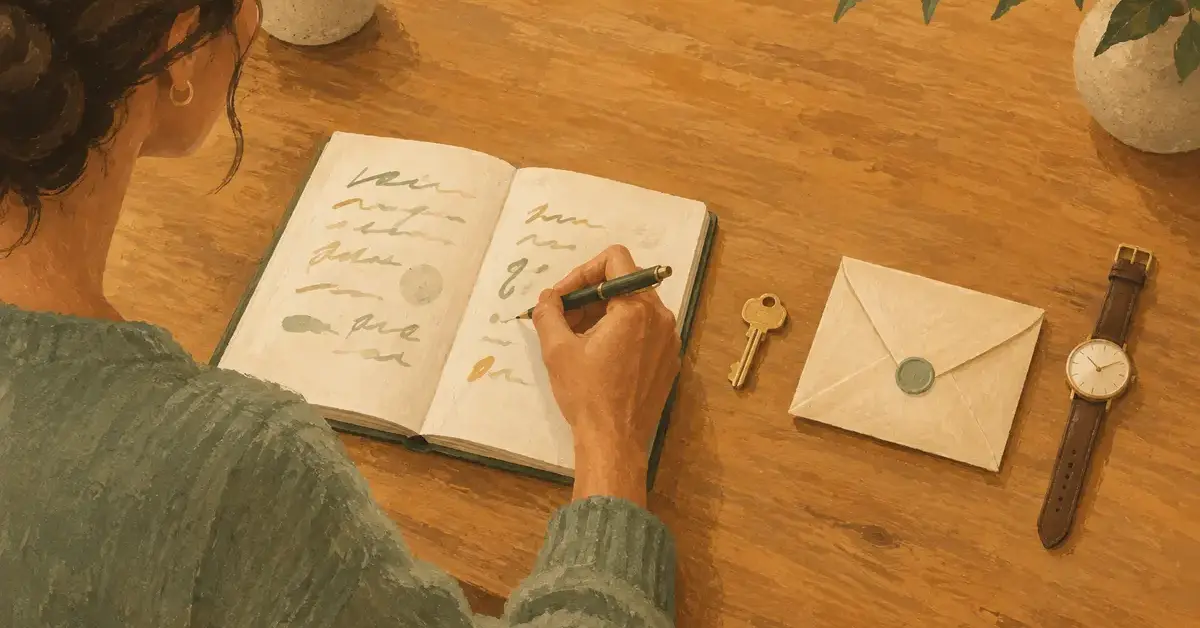
Choose one prompt and write about a specific moment before deciding what it means. A few lines are enough; skip anything that doesn’t fit, and leave other people’s private details out of your notes. These prompts focus on your own choices, not on grading your friends.
What You Already Bring
-
Think of a time a friend thanked you for something you hadn’t thought much about. What was it, and what did you contribute?
Perhaps you saved them a seat, explained the rules without making them feel behind, or remembered to ask how the presentation went. Describe what you actually did rather than reaching for a broad label like “supportive.” If nothing comes to mind, recall a moment when a friend seemed pleased to see you. Start with the exchange you remember, without guessing what they were thinking.
-
Finish this sentence three different ways: “My friends can count on me to…” Which answer feels most like you?
Try one practical answer, one about how you treat people, and one that’s a little funny. “Count on me to know which theater has the good seats” belongs on the page. If all three answers sound like duties, add something you enjoy contributing. Being the person who suggests an excellent afternoon is different from being the person who can help assemble a bookshelf. Both deserve a line.
-
Choose a longtime friendship. How have you changed as a friend since you met?
Maybe you once canceled at the last minute and now give more notice. Maybe your friendship used to revolve around one shared activity, and you’ve learned to enjoy each other’s other interests. Describe one change you’re glad about and something you miss from the earlier years. The second answer can be light: you may have become better at making plans while somehow retiring the wonderfully pointless conversations you used to have.
-
Describe the friend you are in a group and the friend you are one-on-one. What do you like about each version?
You might be the person who brings everyone into a group conversation but prefer to listen during a long walk with one friend. Or your humor may emerge more readily with one person than around a full table. Use a recent example of each. Notice where you enjoy yourself, where you contribute, and whether there’s a part of your personality you’d like to bring into a different setting.
-
What skill or interest of yours could make time with a friend easier or more fun?
Teaching a card game, mending a torn pocket, finding an interesting walking route, making a reliable pie crust: list a few things you already enjoy doing. Next to one, name a friend who has expressed interest in it. An offer might be as casual as, “Want me to show you how I do that?” Keep the distinction between offering and taking over; your friend gets to decide whether it’s useful.
Time, Attention, and Follow-Through
-
Look back at your own messages from the last month. Which conversations did you start, and which invitations did you leave vague?
Focus on what you sent, rather than counting anyone else’s replies. You may notice that you reach out easily with a funny observation but hesitate to propose an actual plan. Or perhaps you organize get-togethers and rarely send a message without an agenda. Choose one pattern worth keeping or changing. I’d start here if you have five minutes: there’s something concrete to look at instead of an ideal version of yourself to invent.
-
How have you kept a friendship going when you couldn’t spend time together in person? Which approach would you enjoy repeating?
A voice memo, a postcard, a shared puzzle, or watching the same movie separately can give you something to talk about. Describe an exchange you enjoyed rather than listing every possible way to stay in touch. What made it manageable for you? Consider the format and the frequency. An occasional long call may fit your life better than trying to maintain a daily conversation.
-
Write down three recent promises you made to friends, including the casual ones. What happened next?
“I’ll send you that recipe.” “Let’s get dinner soon.” “I’ll check which day I’m free.” Separate a specific commitment from a friendly wish you never turned into a plan. If something remains unfinished, decide whether to do it, give an update, or acknowledge that you can’t. Look for language you want to use more carefully next time. “I’d enjoy that” can be accurate when “I’ll organize it” would be an offer you can’t keep.
-
Think of a recent conversation when you gave a friend your attention. What helped you stay present, and what distracted you?
Be concrete: the phone stayed in your bag, you stopped composing your own story, or you asked about a detail you’d otherwise have passed over. Attention doesn’t have to look identical in every setting; a conversation while walking differs from one across a dinner table. Describe what worked in that particular exchange. Pick one adjustment for next time, such as moving somewhere quieter or admitting when you only have ten minutes.
-
What room does your current week actually have for friendship? Describe a version of being a friend that fits.
Use your real schedule, energy, transportation, and budget. Perhaps there’s room for a weekly call but not a weekend outing, or an occasional afternoon together but little daily messaging. Include the time you want for yourself, too. If your weeks vary, describe a busy-week version and an easier-week version. The point is to choose something you can offer willingly, rather than build a plan around a free Saturday that never seems to arrive.
Expectations, Said and Unsaid
-
Write down three things you hope friends will do for you that you haven’t clearly asked for.
You might appreciate an invitation even when you often decline, a check-in before a big event, or more notice before a visit. Beside each hope, note what you’ve actually communicated. Choose one you’d like to put into a straightforward sentence: “I’d still love to be invited; my schedule sometimes opens up.” Leave room for your friend to explain what’s workable for them. Writing a request helps you distinguish it from something you’ve silently treated as an agreement.
-
Pick one expectation you have about friendship. Where did you learn it, and does it still fit?
Perhaps friends in your childhood home dropped by unannounced, or your college friendships involved talking every day. You may still enjoy that kind of closeness. You may also be trying to reproduce an arrangement that depended on living down the hall. Follow one expectation back to a specific memory. Then describe what you’d like to carry forward and what needs updating for the life you and your friends have now.
-
Think about a plan you recently suggested. What did it assume about your friend’s time, money, travel, and interests?
Look at your invitation rather than guessing why someone accepted or declined. Did you include the price and location? Was there room to suggest another day? Did you choose something you both enjoy, or something you hoped they’d try? Rewrite one invitation with the useful details included. For example: “Want to walk at the park Saturday morning? I can do 9 or 11, if either works for you.”
-
When a friend offers help, how do you usually respond? What would an accurate answer sound like?
Recall an ordinary offer: a ride, help setting up, or picking something up while they’re out. Perhaps you say yes readily, decline automatically, or agree before deciding whether the offer suits you. Practice answering the actual question. “Thanks, I’m all set” and “Could you help me carry the table at four?” are both clear responses. Receiving help doesn’t require accepting everything; it can mean letting someone know which offer you would welcome.
-
Recall a minor disappointment that involved an assumption you hadn’t discussed. What could you have asked for at the start?
Maybe you pictured a long catch-up, while your friend had planned a quick lunch. Or you expected help cleaning up after an event without asking beforehand. Separate what happened from what you hoped would happen. Then draft the missing sentence: “I’d love an unhurried visit—how much time do you have?” Keep the entry focused on what you could communicate. It doesn’t need to settle who was right about the whole afternoon.
When Things Get Awkward
-
Recall an ordinary mistake you made with a friend. Write the apology you’d give now in three sentences or fewer.
Name what you did, say you’re sorry, and include a relevant next step if there is one. An original example: “I canceled after you’d already left home. I’m sorry I didn’t check my schedule before we agreed on the time. Next time I’ll confirm that before making the plan.” Use only details that are true of your situation. Leave space after the apology rather than adding a request for immediate reassurance or forgiveness.
-
How would you like to respond when a friend’s good news arrives while you’re disappointed about something in your own life?
Choose an everyday example, such as a friend getting a role you also wanted or moving somewhere you’d hoped to live. Draft the congratulations you’d want to offer without making a false claim about your own mood. “Congratulations! What are you most looking forward to?” leaves the conversation with their news. Your journal can hold the comparison or disappointment separately; your friend doesn’t have to resolve those feelings as part of sharing their announcement.
-
Is there a friendship that faded without a particular disagreement? Draft a message you’d feel comfortable sending, if you want to reconnect.
Choose someone you would be glad to hear from, rather than someone you think you ought to contact. Give the message a real reason or a manageable invitation. An original starting point: “I passed our old lunch spot and thought of you. Would you like to catch up sometime this month?” You can leave it unsent. If you do send it, keep the invitation open to a yes, a no, or no reply.
-
When a friend brings you a problem, how do you decide what kind of response to offer?
Think of a recent conversation. Did you start suggesting solutions, share a similar experience, ask questions, or offer practical help? Describe what you noticed in your friend’s response without claiming to know more than they said. Then try a question you could use next time: “Would you like me to listen, help you think through options, or lend a hand?” Choose wording you would actually say, not a line that makes an ordinary conversation sound like a formal interview.
-
Write about the last time you declined a friend’s invitation or request. How would you like to say no next time?
Look at the wording rather than putting your entire friendship on trial. Was your answer clear? Did you leave someone waiting while you searched for the perfect explanation? Draft a response that is both accurate and kind: “Thanks for inviting me. I can’t make the trip, but I hope you have a wonderful time.” Add another plan only if you want to make one. A decline can stay a decline without creating a new commitment.
The Habits You Want to Keep
-
What do you and a friend do for the pleasure of it? Describe what you enjoy about that time.
It might be a running joke, browsing a bookstore, swapping very specific recommendations, or playing a game neither of you takes seriously. Give the enjoyable part a few sentences before turning it into anything to organize. If you’d like more of it, consider an invitation that keeps the original appeal. A casual walk can remain a casual walk; it doesn’t need a new destination, special equipment, or a carefully planned tradition.
-
Choose one friend and write five things you’d enjoy sharing over the next year.
Keep the ideas close to the friendship you actually have. “Mail them the book when I finish it.” “Try that new puzzle together.” “Leave enough time after lunch to keep talking.” Include something familiar alongside anything new. These are possibilities, not a schedule you’re assigning to another person. Circle one idea you could offer this month, and identify what you need to ask before putting anything on the calendar.
-
What would you like to remember about your friends’ lives, and what reminder system would you realistically use?
Birthdays, the opening night of a play, a move, or the week of an exam may be worth noting. Choose a few dates your friends have shared with you, rather than trying to document everything about them. A calendar reminder or a brief notebook entry can be enough. Decide when you would look at it and what you’d do with the reminder. Remembering the date is useful when it leads to the call or message you wanted to send.
-
What habits help you respect a friend’s private news? Write a rule you would want to follow without recording the news itself.
Consider ordinary situations: a group conversation, an excited announcement, or someone asking for an update that isn’t yours to give. You might choose to ask before sharing a photo or let a friend announce their own plans. Practice a short response for moments when you don’t want to answer on someone else’s behalf: “I’ll let them tell you about that.” Keep this entry about your choices, not the contents of anyone’s confidence.
-
Finish this sentence with one action you can picture: “For the next month, as a friend, I want to…”
“Offer a specific date when I suggest meeting.” “Ask how the important thing turned out.” “Make room for something fun.” Pick one action from your answers, including a habit you already like. Note the next occasion when you could use it, and put a reminder somewhere you’ll notice. At the end of the month, you can return to the sentence and decide whether to keep it, adjust it, or choose something else.
Choose What Leaves the Page
An entry can stay private. It can also produce something useful to say or do. After writing, distinguish between a thought you wanted to record, a question only your friend can answer, and an action you can take yourself. Those lead to different next steps.
For example, “I miss our long conversations” might lead to an invitation. “I wonder whether they prefer calls” is something to ask rather than decide in your journal. “I promised to send the recipe” already has a clear next step. You can act on one answer without turning every page into a list of improvements.
These original sample messages offer a few ways to carry an answer into a conversation:
- To express a preference: “I’d love a longer catch-up. Would you be up for a call one evening next week?”
- To update an unfinished promise: “I haven’t checked those dates yet. I’ll look tonight and let you know tomorrow.”
- To make room for fun: “I miss our card games. Want to play a few rounds Sunday afternoon?”
If you use the prompts with a friend, each person can choose what to share and pass on any question. Reading whole entries aloud isn’t required. You might each share one thing you enjoy about the friendship and one invitation you’d like to make. Keep private notes private, and ask before offering advice about the other person’s answers.
Save any entries you want to revisit. Add a date and, later, a brief note about what you tried. “We found a better time to call” or “I still prefer making plans in person” gives your next round of reflection somewhere concrete to begin.