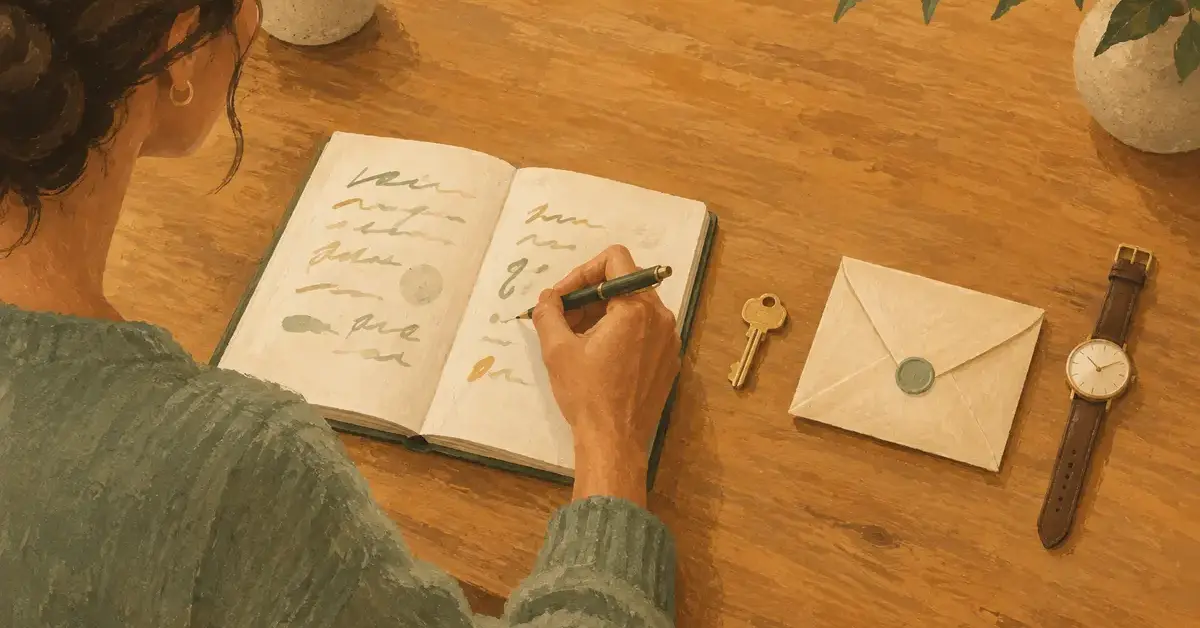
“I want more free time” is a useful beginning. The next sentence can tell you more: time for friends, time alone, or time to finish a project that has nothing to do with work.
Pick one prompt, write for five or ten minutes, and skip anything you’d rather leave alone. Fragments and lists count; an answer can be as short as a few lines.
What You Want Right Now
- Finish this sentence ten times: “I want…” Then circle the answer that surprised you and write a little more about it.
- Describe an ordinary Tuesday you would be glad to repeat. What time do you wake up, who do you talk to, and what do you skip?
- Write down something you want that you’ve never said out loud. What appeals to you about it? Keep the page private if you prefer.
- List three things you keep buying, saving, or bookmarking. What do they have in common, and which would you actually like to use or experience?
- Pick three favorites—a meal, a book, and a place, for example. Describe what you like about each beyond “it’s good.” Look for any shared qualities.
- What do you want more of this month, and what do you want less of? Keep each list to five items.
- Name something you want just because you’d enjoy it. Write about why that reason does or doesn’t feel sufficient to you.
- What are you looking forward to right now? If the answer is “nothing much,” describe something you’d like to have on the calendar.
- Describe something you envied recently, perhaps in a friend’s life, a stranger’s post, or a novel. Which part did you want, specifically?
- Write a wish list without prices, practical arrangements, or explanations. Then go back and add one sentence beginning with “because” to each item.
Where Your Wants Come From
A borrowed idea can still be a good fit. Use this section to distinguish an influence you welcome from an expectation you haven’t reconsidered.
- What did you want to be when you were ten? What did you imagine that job would let you do or feel?
- Make three columns for current goals: chose myself, picked up from others, and unsure. A goal can appear in more than one column. Which deserves another look?
- Write about a “should” you hear in your head often. Where did you first encounter that expectation, and how well does it fit your life now?
- Describe what success looked like in the home you grew up in. Which parts do you still agree with, and which would you define differently?
- Think of someone whose life you admired as a teenager. What did you admire, and how has your view of that life changed?
- Recall something you wanted for years and eventually got. How did the experience compare with what you expected? Include what pleased you as well as what didn’t.
- Name a preference you picked up from someone else: a favorite kind of food, music, or outing. What has made it yours, too?
- Pick an advertisement or trend that caught your interest. Beyond the product, what kind of experience or everyday life did it make appealing?
- What do the people closest to you assume you want? Where are they right, and where are they a few years out of date?
- Which of your wants would stay appealing if nobody else could see the result? Which include the pleasure of sharing or being recognized? Describe that difference without judging it.
Your Days, Looked at Closely
Use a recent week as your starting point. A calendar or a quick list of what you did can help you recall the less memorable parts.
- List the moments from the past week when you lost track of time in a good way. What held your attention in each one?
- Which tasks do you postpone even when they seem easy? What would make one of them more workable: clearer instructions, help, a different time, or something else?
- Describe your ideal morning, then your actual morning. Which single difference matters most to you, and which differences are you happy to leave alone?
- When during the day do you most enjoy having company, concentrating, or being alone? Compare those preferences with how your day is currently arranged.
- Write about a chore or routine you enjoy more than people might expect. Which part is satisfying: the process, the result, or something else?
- If each day had one extra hour, where would yours go? Describe the activity closely enough that you could picture yourself doing it.
- Name something you do mainly because you’ve always done it. Would you choose it today? What would you keep, change, or replace?
- Describe a place where you find it easy to think, such as a park bench, a library table, or one corner of your home. What about it helps?
- List five things that left you worn out this week and five you found refreshing. Read both lists together and note any pattern or surprise.
- Describe a break that leaves you feeling rested rather than merely occupied. What do you do, how long does it last, and what makes it possible?
The People Around You
Answer from your own point of view. Name the company, conversations, and shared plans you’d like rather than trying to guess what someone else thinks.
- Who do you feel most like yourself around? Describe something about your time together that helps you feel comfortable and at ease.
- Describe a conversation you’d like to have more often. Who is it with, what do you talk about, and where does it usually happen?
- What kind of friend do you want to be this year? Name one concrete thing that friend would do next week.
- Recall an ordinary time you said yes when you would have preferred to decline. What did you want instead? Draft a courteous response you could use another time.
- Write about someone you’ve lost touch with and would enjoy hearing from. Draft the first message you might send, without assuming how they would respond.
- What do you want people to come to you for? Compare that with what they actually come to you for, including any difference you welcome.
- When a week gets busy, what help would you appreciate most: an errand, company, advice, or uninterrupted time? Draft a clear request someone could understand.
- Whose opinion carries particular weight when you make a choice? Describe when that influence is useful and when you would rather rely on your own preference.
- Name a tradition, celebration, or recurring gathering you’d like to start. Who might enjoy it, and what would make it manageable to repeat?
- Finish this sentence about someone you love: “I’d like us to have more…” Then describe a first step you could suggest without requiring their agreement.
Work, Money, and Ambition
Here, work can include a paid job, caregiving, volunteering, or a personal project. Explore the effort and everyday arrangements you want; an entry doesn’t commit you to a decision.
- Describe a task, paid or unpaid, that felt like a good use of your abilities. Which part would you like to do more often?
- Besides a paycheck, what do you want work to give you? Rank challenge, stability, recognition, flexibility, and good colleagues, and add anything missing.
- Write about an accomplishment you’re proud of that received little attention. What makes it significant to you, even without much recognition?
- Which job title, role, or milestone sounds appealing from the outside? Describe the ordinary tasks behind it that you would—and would not—want to do.
- What does “enough” look like for you? Describe it through daily life rather than numbers: your surroundings, choices, responsibilities, and time.
- Name a skill you’d like to learn purely because it sounds fun. Which part of learning it appeals to you, apart from becoming good at it?
- Describe how you prefer to learn a skill: watching, reading, practicing alongside someone, or experimenting. What would a first lesson that suited you look like?
- Which kind of ambition feels most like yours: getting better, taking on more, having greater flexibility, or something you’d name yourself? Give a concrete example.
- Recall one everyday purchase from the past year you’d happily make again and one you wouldn’t. What separates them: usefulness, enjoyment, convenience, or something else?
- Imagine a friend describing your work or a project five years from now. What would you like them to say about what you do and how you do it?
Values in Everyday Choices
Use ordinary examples here: how you spend time, keep a promise, or respond when two priorities compete.
- Write down five values that matter to you. Then describe a recent choice that showed one of them in action, even in an unremarkable situation.
- Describe a choice you were glad you made even though it wasn’t the popular option. What mattered more to you than choosing what others preferred?
- When two things you care about conflict, such as time and money or loyalty and candor, which usually wins? Write about a specific example.
- What rule do you keep for yourself even when nobody is checking? Explain what it helps you protect or make room for.
- Choose a minor decision you would handle differently, such as how you spent a free afternoon. What would you make room for if you chose again?
- Name a compliment you’d love to receive about your actions or character. Which value does it point to, and how do you already practice it?
- Write about an opinion you revised after learning more. What made you willing to reconsider, and what helped the new view make sense?
- If a friend asked for three principles you try to live by, what would you say? Note one you practice often and one you’re still working on.
What You Believe, and Why
Use the language that fits your outlook—religious, spiritual, philosophical, or something else. Leave a question open if that is the most accurate answer.
- Write about a belief you hold about what makes a good life. Which experiences have made that belief meaningful to you?
- Describe a moment when you felt part of something bigger than yourself, perhaps in a place of worship, outdoors, at a concert, or somewhere unexpected.
- List a few beliefs you grew up with. Mark which ones you’ve kept, changed, set aside, or are still considering. Choose one to write about further.
- What do you hope is true about people in general? Describe experiences that support that hope, without requiring it to explain every person you meet.
- Write about a question you return to without reaching a final answer. What draws you back, and has the question itself changed over time?
- Which practice makes room for reflection in your life: prayer, a walk, music, or something else? What do you notice when you make time for it?
- Who taught you something about faith, meaning, or purpose through their actions? Describe what you learned from watching them and how you interpret it now.
- Finish this sentence: “When I think about what matters most, I come back to…” Keep writing for five minutes, following whatever examples come to mind.
Past Wants, Future Wants
- Write a letter to yourself from five years ago. What would surprise that version of you about what you want now?
- Describe something you used to want badly and no longer do. What changed: your preferences, your understanding of it, your circumstances, or some combination?
- Picture yourself on an ordinary evening a year from now. Where are you, what are you doing, and what would you like to have stayed the same?
- Which want fits this season of your life, and which can wait? Describe the practical difference between “later” and “not for me.”
- List three wants you hope to keep as you get older. What might each look like in a different setting or stage of life?
- If you could pursue only one goal this year, which would it be? Write about what you’d set aside to make room for it.
- What would you try if a clumsy first attempt were completely acceptable? Describe what you would enjoy about trying, even before you improved.
- Write a three-sentence note to your future self about a preference you tend to forget when making plans. Include an example that would help you remember.
- Look back over what you’ve written. Which want keeps showing up, and what’s one step toward exploring it that you could take this week?
How to Use Your Answers
Make a broad answer concrete
When an answer stays general, add an example. “I want to be more creative” leaves plenty undecided. “I’d like to spend an afternoon drawing buildings around my neighborhood” gives you a clearer picture of the activity you want.
You can also ask what a wish would make possible. A sample entry might read: I want a bigger apartment because I’d like to host dinner. What I miss is having friends around my table.
Both wants can be real: more space and more company. You might arrange a picnic or host a smaller gathering while continuing to consider whether a different home matters to you. The point of the follow-up is to understand the wish, not talk yourself out of it.
Separate interest from a plan
Mark an answer with one of three labels: curious about, want to try, or ready to plan. Wanting to know more about pottery is different from wanting to rearrange every Thursday around a class. Your entry can record that distinction before you agree to anything.
A clear want may also run into limits on time, money, or existing commitments. Note those beside it. “I’d like to travel, but this isn’t the year for a long trip” preserves both the preference and the practical situation.
Choose a way to return
- For a quick start: Try prompts 1, 6, and 8 on separate days. They focus on current wishes, everyday preferences, and something to anticipate.
- To examine expectations: Use prompts 12, 13, and 19. Look for a goal you still choose, an expectation you question, or an assumption you might want to update.
- When priorities compete: Start with prompt 53, then try 72. Write down the trade-off rather than expecting one choice to give you everything.
- With a friend: Choose a prompt, write separately, and share only the parts you each select. Either person can pass, and neither needs to hand over the actual page.
- For a later check-in: Date your answers and revisit one prompt after a change in your schedule or circumstances. Compare specific details rather than grading your progress.
Leave yourself a useful last line
At the end of an entry, underline one sentence you want to remember. If an action would help you learn more, make it modest and specific: “I’ll look for a one-time beginner session before committing to a weekly class.”
An entry can also end with something unresolved. Record the question and the detail you’re missing: what the activity involves, how much time it takes, or whether you enjoy doing it rather than imagining it. That gives you a useful place to begin next time you open the notebook.