Two toasters, one counter, and an opinion neither of you knew you had. Moving in together brings some lovely decisions—and a few surprisingly specific ones about where the spatulas belong. Start by choosing what comes with you, before either person packs a second set of everything.
Before Anything Gets Packed
- Measure the apartment and the route into it. Record room dimensions, closet depth, doorways, hallway turns, and any stairs or elevator openings your furniture must pass through. Include furniture dimensions in the same note so you can check a fit without measuring everything again.
- Make one inventory from two households. Compare beds, couches, tables, cookware, towels, lamps, and appliances. Mark each item keep, pass along, or decide later. Choose for condition, usefulness, and fit rather than automatically keeping whoever’s version is newer.
- Name the belongings that matter personally. Each person should identify favorites before the sorting starts. A concert poster or inherited mixing bowl deserves a different conversation from an extra dish rack. Find a workable place for meaningful possessions, and ask before donating anything that belongs to the other person.
- Set aside unresolved items. Use a labeled box or a short list for decisions that can wait. Pick a review date about a month after move-in. Bulky furniture needs an earlier decision if there’s nowhere practical to keep it.
- Read the building information together. Check move-in access, elevator reservations, parking, delivery rules, wall-hanging restrictions, pets, guests, and maintenance requests. Save the relevant contacts where both of you can find them.
- Assign the move’s administrative tasks. Put one person’s name beside each job: arranging transportation, confirming helpers, scheduling internet, transferring utilities, and collecting keys. Record confirmation details rather than relying on “I think that’s handled.”
- Make a buy-now list and a later list. Separate missing essentials from replacements you’d merely prefer. Agree on the initial shopping budget and which purchases need a conversation first.
If one person is moving into the other’s existing apartment, do the inventory together anyway. Clear actual shelves, drawers, and wall space before arrival. “Put your things wherever” is harder to use than an empty closet section.
Make Move-In Day Work
Before boxes cover the rooms, note existing damage and follow the building’s process for reporting it. Confirm that you both have access to the apartment and know how to reach management.
Keep a first-night kit accessible: toilet paper, hand soap, towels, toothbrushes, personal essentials, chargers, a change of clothes, sheets, snacks, trash bags, scissors, and the tools needed to assemble the bed. Carry it somewhere you can reach without unloading everything else.
- Make the bed and set up the bathroom before tackling decorative boxes.
- Locate exits and ask management about the apartment’s emergency equipment and procedures.
- Check smoke and carbon monoxide alarms according to the building’s instructions; report missing or nonworking equipment.
- Keep doorways and walking routes clear as you unpack.
- Plan an easy first dinner that doesn’t depend on finding every kitchen box.
The Entryway
A working entry gives arriving belongings an obvious place to land. Set it up early, before the nearest chair becomes permanent bag storage.
- Keys: Choose hooks, a dish, or another consistent spot, with room for both people’s keys.
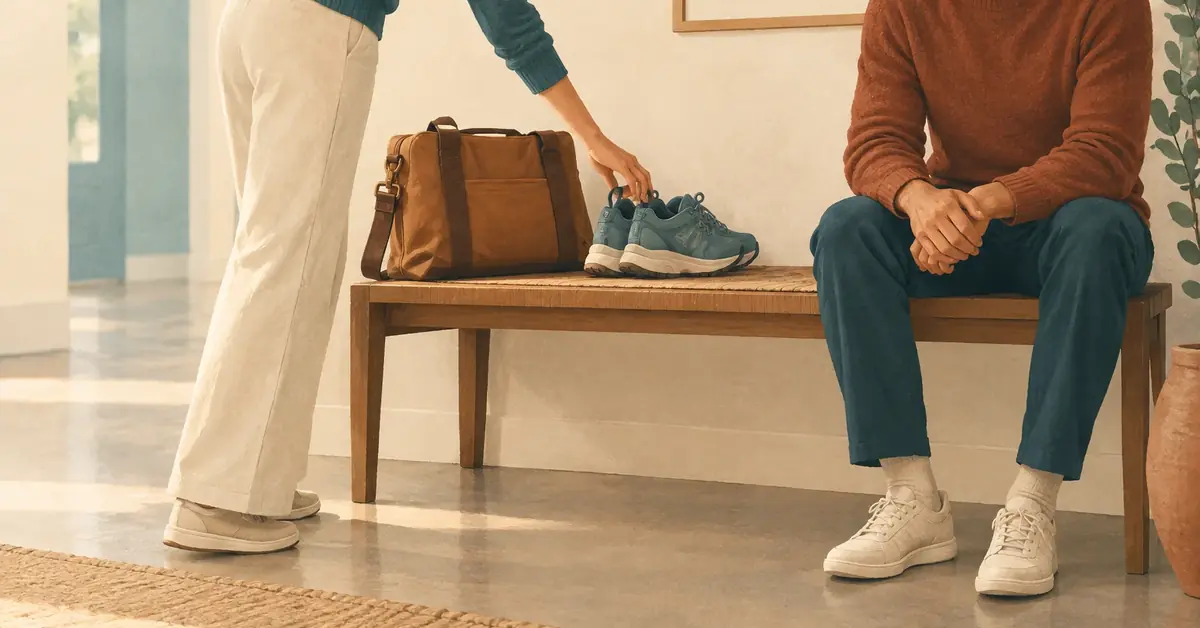
- Shoes and outerwear: Designate a rack, tray, closet section, or corner. Add bag and coat hooks where permitted.
- Mail: Pick a landing spot and a regular time to sort it. Keep private paperwork out of a communal hallway.
- Outgoing items: Reserve a place for returns, library books, and things you’ve promised to bring someone.
- Doormat: Check building rules before placing anything outside the apartment.
Agree on shoes indoors and what you’ll ask of guests. If you prefer shoes off, make a convenient place for visitors to leave them.
The Kitchen
Unpack around how you cook, rather than how many kitchen boxes you brought. The person making breakfast should be able to find a bowl without opening six cabinets.
Combine what you own
- Keep cookware you use and have room to store. Set aside damaged or unusable pieces rather than making space for them by default.
- Choose which appliances stay on the counter. Store occasional-use equipment elsewhere if there’s room; discuss passing along duplicates.
- Match containers with their lids before putting them away.
- Choose cabinet and drawer locations together. Keep frequently used items accessible to both people, and label shelves temporarily if helpful.
Check the basics
- Plates, bowls, glasses, mugs, and utensils for your usual meals
- A pot, saucepan, skillet, and baking sheet suited to what you cook
- Knives, a cutting board, can opener, colander, spatula, and tongs
- Measuring cups and spoons if you use recipes
- Food containers, oven mitts, and dish towels
- Dish soap, a brush or sponge, and a place for dishes to dry
- Trash and recycling containers with correctly sized bags
- Pantry basics you’ll use, rather than a speculative collection of spices
Confirm what fire-safety equipment is provided or needed, where it belongs, and how to use it according to its instructions.
Agree on food and cleanup
Decide which groceries are shared and which are personal. Put dietary requirements and foods either person needs reserved on the shared shopping note. A labeled shelf can prevent an accidental lunch disappearance.
Choose a workable cooking and cleanup arrangement: alternating meals, cooking together, or dividing preparation and dishes. Define what “kitchen done” includes—perhaps leftovers put away, dishes handled, and counters wiped—so the job has a recognizable finish.
The Living Room
Both people should be able to recognize themselves in the room. That may mean an existing sofa beside the other person’s favorite print, rather than replacing everything with a matching set.
- Sketch the layout. Leave a clear walking route and check that doors and drawers can open. Try the furniture arrangement before buying pieces to fill apparent gaps.
- Plan seating. Start with comfortable places for the people who live there. Add guest seating if you host and have space; a dining chair can do occasional duty.
- Choose lighting and window coverings. Check what’s already installed and what you need for privacy. A lamp beside the place you read may matter more than another decorative piece.
- Share the walls. Each person can select favorite pieces, then choose placements together. Use hanging methods permitted by the building.
- Give loose items a home. Find spots for remotes, controllers, current projects, and charging devices.
- Discuss competing uses. Agree on what happens when one person wants television and the other wants to read or take a call.
The Bedroom
Set up for the way each of you sleeps and gets dressed. Matching bedside tables are optional; being able to reach your own lamp is useful immediately.
- Choose the bed. Decide which mattress and frame stay. Measure the full setup, including space to walk around it and open nearby storage.
- Arrange bedding. Check sheet sizes before combining sets. Keep a spare set if you have one, and choose pillows individually. Separate blankets are an option if you prefer different bedding weights.
- Place bedside essentials. Give each person somewhere to put a light, charger, glasses, or book. A shelf can substitute for a nightstand.
- Compare schedules. Talk about alarms, reading lights, room temperature, and getting dressed while the other person sleeps. Lay out early-morning clothes elsewhere if that helps.
- Divide clothing storage by what needs storing. Count hanging clothes, folded items, and shoes before assigning sections. Equal access matters more than drawing a line through the middle of every shelf.
- Choose laundry landing spots. Put hampers where you’ll use them, with separate ones if you handle laundry individually.
Live with the arrangement before buying extra storage. A dresser blocking the closet is not an improvement just because it holds more sweaters.
The Bathroom
In a one-bathroom apartment, compare morning schedules before the first workday. If both of you need the mirror at the same time, move one person’s getting-ready supplies to another suitable spot.
Divide the space
- Assign shelves, drawers, and shower storage according to what each person uses.
- Choose separate towel hooks or distinguishable towels.
- Keep everyday products accessible without stacking them in front of the other person’s things.
- Agree on how shared supplies get added to the shopping list. Opening the last spare roll is a useful signal.
Check supplies
- Bath and hand towels, plus any washcloths you use
- A bath mat and, if needed, a shower curtain, liner, and rings
- Hand soap, toilet paper, and a trash can
- A toilet brush and plunger
- Basic first-aid supplies and personal essentials
- Appropriate cleaning supplies, stored according to their labels and away from children and pets
Check the shower setup before buying a curtain or organizing rack. What worked in your previous bathroom may not fit this one.
Laundry and Cleaning
Find out how laundry works in this building: machine access, payment, posted hours, and where wet items can dry. If you’ll use a laundromat, plan how you’ll carry loads there.
- Choose separate or combined laundry. Discuss care instructions and items that require special handling before washing each other’s clothes.
- Agree on products. Account for either person’s product restrictions and scent preferences before buying a large container.
- Gather equipment for your surfaces. Check what the flooring and appliances require. Combine your existing vacuum or broom, dustpan, mop, cloths, gloves, and suitable cleaners before shopping.
- Plan drying and storage. Decide where a drying rack can stand without blocking the room, and where laundry supplies will live.
Give recurring jobs a clear owner
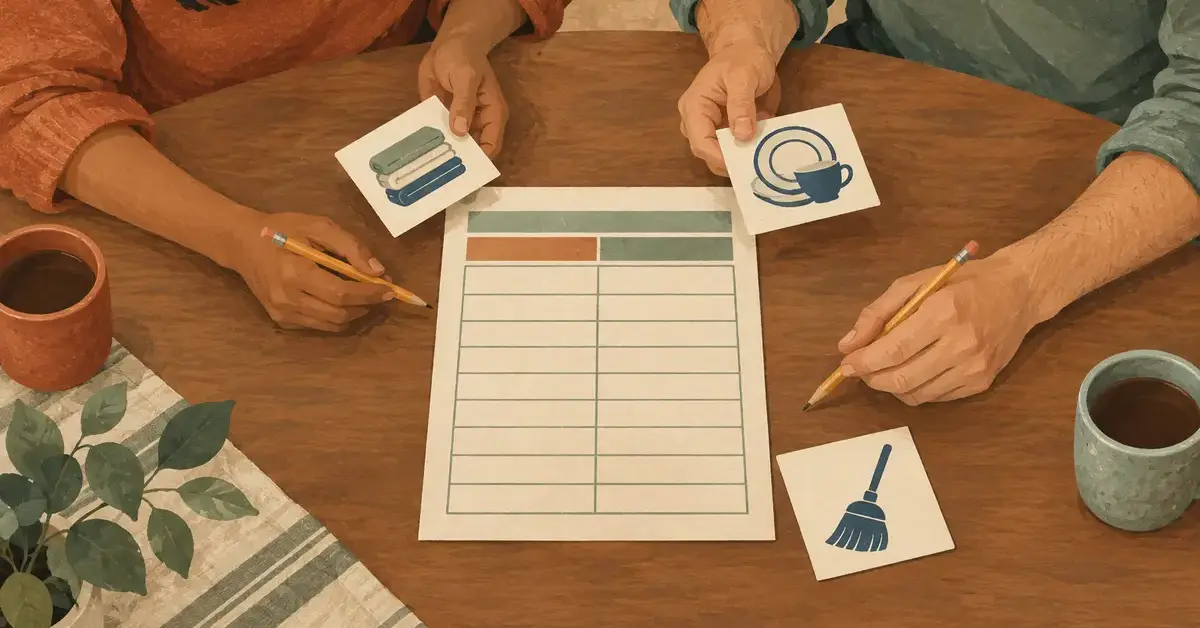
List dishes, trash, recycling, bathroom cleaning, floors, laundry, groceries, and household restocking. Divide by preference where possible, then compare the time and frequency of the remaining work.
For each job, agree on what completion means and how often it happens. “Take care of recycling” might include breaking down boxes, carrying them out, and returning the bin. Include noticing when a task or supply needs attention, rather than leaving one person to issue reminders.
Try the arrangement for two weeks, then adjust it around your actual schedules. Swap or trade tasks openly when a busy week changes what either person can manage.
The Work Corner
If either of you works or studies at home, plan for simultaneous use—not only the days when one person has the apartment alone.
- Choose a practical spot for each person who needs one. A shared table can work if you agree on when it must be cleared.
- Check that internet access and available outlets serve both work areas.
- Identify a place for calls and compare meeting schedules when space overlaps.
- Discuss background noise and interruptions. Headphones can help with sound, but they don’t create a private room.
- Choose where equipment goes after work, especially if the desk is also the dining table.
- Keep work documents and account access separate where privacy requires it.
Test the setup during a normal workday before buying more furniture. You may discover that the bigger issue is a chair in the walking route or a call schedule that needs coordination.
Closets, Storage, and Tools
Assign storage by category so both of you can retrieve things without asking where the other person put them.
- Household storage: Choose homes for linens, cleaning equipment, bags, and spare supplies.
- Seasonal belongings: Label holiday decorations, off-season clothing, and occasional-use gear. Keep frequently needed items in front.
- Hobbies: Give instruments, craft supplies, sports equipment, and other interests an agreed amount of usable space.
- Suitcases: Nest compatible pieces if practical, without making everyday belongings difficult to reach.
- Tools: Combine screwdrivers, a hammer, tape measure, level, and furniture assembly tools in one known location.
- Household extras: Keep a flashlight, suitable spare batteries, and replacement bulbs where both people can find them.
Leave some storage unassigned if possible. Filling every shelf on arrival leaves nowhere for the ordinary things you acquire after moving.
A Balcony, Patio, or Outdoor Space
Skip this section if it doesn’t apply. If you do have outdoor space, check the building’s rules before furnishing it.
- Measure before choosing seating, and keep access clear.
- Check restrictions on plants, hanging items, outdoor cooking equipment, and storage.
- Choose plants suited to the conditions and decide who will care for them.
- Plan where cushions and other weather-sensitive belongings will go when not in use.
Start with what you’ll use. Two chairs may be enough; outdoor decorating can wait until you know how you spend time there.
Bills and household purchases
Agree on how you’ll divide rent and recurring household costs. List each bill, its due date, the person handling payment, and how you’ll confirm it’s been handled. Include utilities, internet, and any shared subscriptions you choose to keep.
For household shopping, decide how to record shared purchases and when to settle up. Separate jointly agreed essentials from individual preferences so neither person is surprised by an expense.
Lists and household information
- Choose one grocery and household list you can both update.
- Use a shared calendar or another agreed method for deliveries, visitors, maintenance appointments, and plans that affect the apartment.
- Keep building contacts, household instructions, and relevant documents somewhere both people can access. Keep personal passwords private.
Guests and time at home
Discuss notice for visitors, overnight guests, and plans that use the shared room. Decide how you’ll check with each other before extending invitations.
Also make room for time alone. In a compact apartment, that could mean one person reading in the bedroom while the other uses the living room. Say what you’d like directly: “I’d like an hour to myself after work, then I’d love to have dinner together.”
What Can Wait—and What to Review
Matching dishes, a perfect rug, a headboard, and a fully arranged gallery wall can wait. So can replacing useful furniture merely because it came from one person’s previous home.
During the first week, keep one running list of missing items. Separate genuine obstacles from preferences: no window covering in the bedroom is different from disliking the color of an existing lamp.
About a month in, walk through the apartment together. Check what keeps landing in the wrong place, which supplies run out, and whether either person struggles to access storage. Revisit the chore split and the decide-later box. Change the arrangements that aren’t working before buying organizers to preserve them.
Use the free printable checklist below to record who is handling each task and mark it complete. Cross out anything that doesn’t apply, and add apartment-specific details beside the relevant task.
Use the worksheet below, or download a PDF to save and print. No sign-up needed.
Your First Apartment Together: Room-by-Room Checklist
Review the tasks together. Write a name in the Who column and mark Done when complete. Cross out anything that does not apply. Add apartment-specific details beside the relevant task, and keep a separate list of purchases that can wait.
| Area | Task | Who | Done |
|---|---|---|---|
| Before the move | Measure rooms, furniture, and the route into the apartment. | ||
| Before the move | Compare belongings and decide what stays. | ||
| Before the move | Choose places for each person's meaningful belongings. | ||
| Before the move | Set aside unresolved items and choose a review date. | ||
| Before the move | Check building rules, move-in access, and contacts. | ||
| Before the move | Assign transportation, helpers, utilities, and internet setup. | ||
| Before the move | Agree on initial purchases and a shopping budget. | ||
| Move-in day | Record existing damage and follow the building's reporting process. | ||
| Move-in day | Keep first-night essentials accessible; make the bed and stock the bathroom. | ||
| Move-in day | Check alarms using building instructions and locate emergency information. | ||
| Entryway | Choose spots for keys, shoes, coats, and bags. | ||
| Entryway | Set up mail and outgoing-item storage; agree on shoes indoors. | ||
| Kitchen | Choose cookware, counter appliances, and cabinet locations. | ||
| Kitchen | Check dishes, utensils, pots, pans, knives, and cooking tools. | ||
| Kitchen | Gather food containers, oven mitts, dish supplies, and bins. | ||
| Kitchen | Confirm fire-safety equipment, location, and instructions. | ||
| Kitchen | Agree on shared food, personal food, cooking, and cleanup. | ||
| Living room | Test the furniture layout and keep walking routes clear. | ||
| Living room | Check lighting, privacy coverings, and places for loose items. | ||
| Living room | Choose wall placements and discuss competing uses of the room. | ||
| Bedroom | Choose the bed, check sheet sizes, and arrange bedding. | ||
| Bedroom | Set up bedside essentials and discuss sleep schedules. | ||
| Bedroom | Divide clothing storage and place hampers. | ||
| Bathroom | Agree on morning access, shelves, shower storage, and towel spots. | ||
| Bathroom | Check towels, bath mat, shower supplies, soap, and toilet paper. | ||
| Bathroom | Gather a plunger, toilet brush, trash can, and first-aid supplies. | ||
| Laundry and cleaning | Check laundry access, payment, products, and drying space. | ||
| Laundry and cleaning | Combine suitable cleaning equipment and store products as labeled. | ||
| Laundry and cleaning | Assign recurring chores, define completion, and schedule a review. | ||
| Work corner | Choose work spots and check internet access and outlets. | ||
| Work corner | Plan for simultaneous calls and after-work equipment storage. | ||
| Storage | Assign homes for linens, seasonal belongings, hobbies, and suitcases. | ||
| Storage | Combine tools and choose a place for household extras. | ||
| Outdoor space | Check building rules, measure, and plan weather-sensitive storage. | ||
| Shared systems | List recurring bills, due dates, payment responsibilities, and cost split. | ||
| Shared systems | Choose shared lists, a calendar method, and document storage. | ||
| Shared systems | Agree on visitors, overnight guests, and time alone at home. | ||
| One month in | Review storage, chores, missing essentials, and unresolved belongings. |
happilylover.com